
Case Study Details
- A full redesign with new content across 22 pages
- Services: content creation, site redesign, website development, and hosting
- AI crawlers from OpenAI, Anthropic, and Perplexity allowed by name
- The firm, its two attorneys, and seven common questions published as structured data
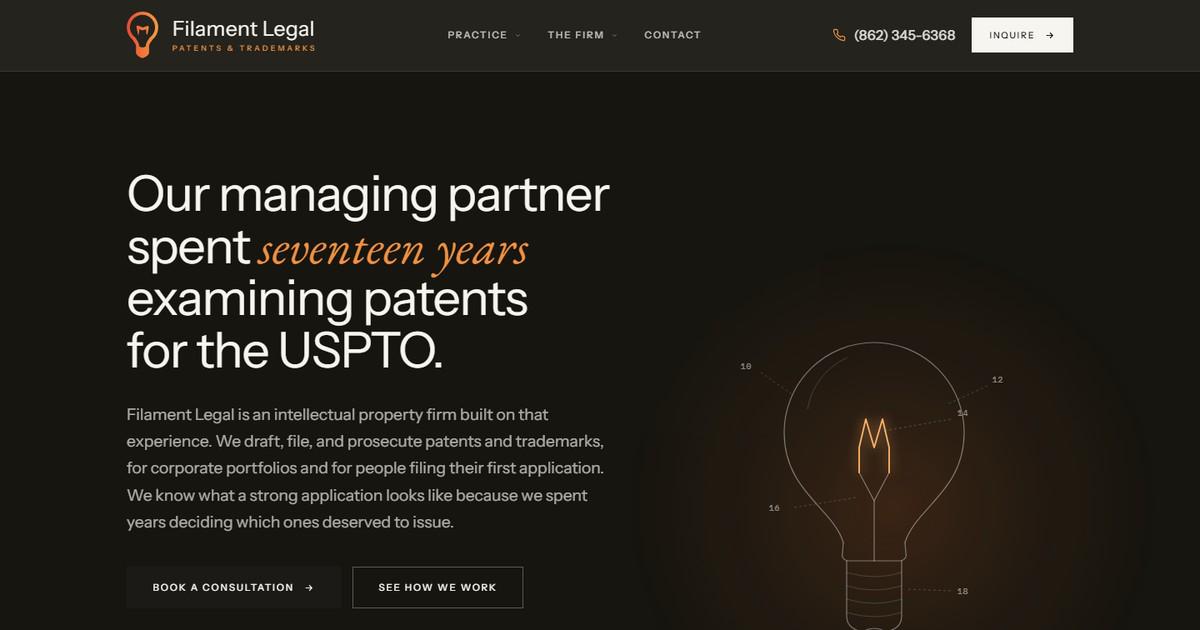
Maurice Williams spent seventeen years examining patents at the United States Patent and Trademark Office. He is the managing partner of Filament Legal, an intellectual property firm that drafts, files, and prosecutes patents and trademarks for corporations, startups, and independent inventors.
The new site’s home page opens with that background.
An assistant favors pages that answer one question well
A person with an invention asks an assistant who can file a patent for a medical device or a piece of software, and the assistant answers from pages it can crawl. The goal was for Filament Legal to be named when someone asks AI which patent firm to call.
WISLR’s brief was to give the firm a page for each of those questions and to make sure AI crawlers could reach every one.
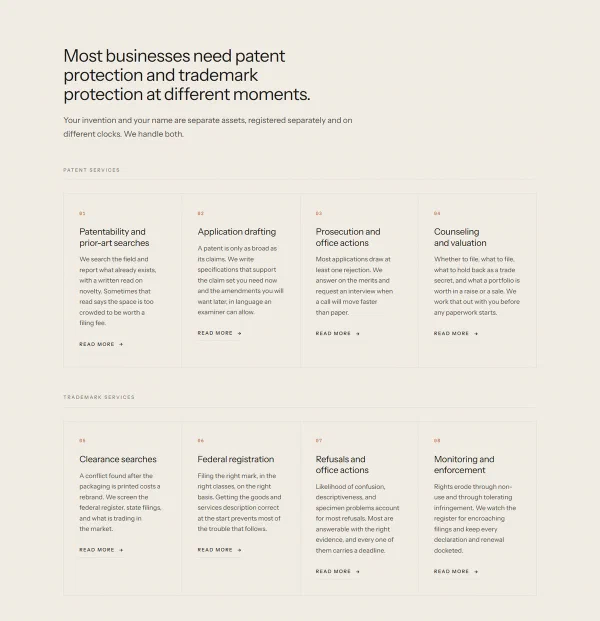
The 22 pages cover each service and each technology area
Patent services each have a page: patentability searches, application drafting, office action responses, and valuation. Trademark services do too, along with the technology areas the firm covers: software and AI, medical devices, mechanical patents, and design patents.
The headings are written as statements a visitor can use. One reads: “A patent application usually takes two to three years to reach a decision.”
The robots.txt file allows the crawlers behind ChatGPT, Claude, and Perplexity
The site’s robots.txt file lists each crawler by name and allows it. A comment in the file gives the reason: people ask an assistant which patent firm to call.
In structured data, the home page describes the firm as a legal service and names its two attorneys. Seven common questions are published there with their answers.
The same build is available to business owners in Toledo, Ohio
WISLR sells it as two of its Toledo services: Website in a Day and GEO and AI visibility.